Skip to Main Content
Uncategorized

Learning to Be Human, Not Perfect: A Conversation with Malala Yousafzai

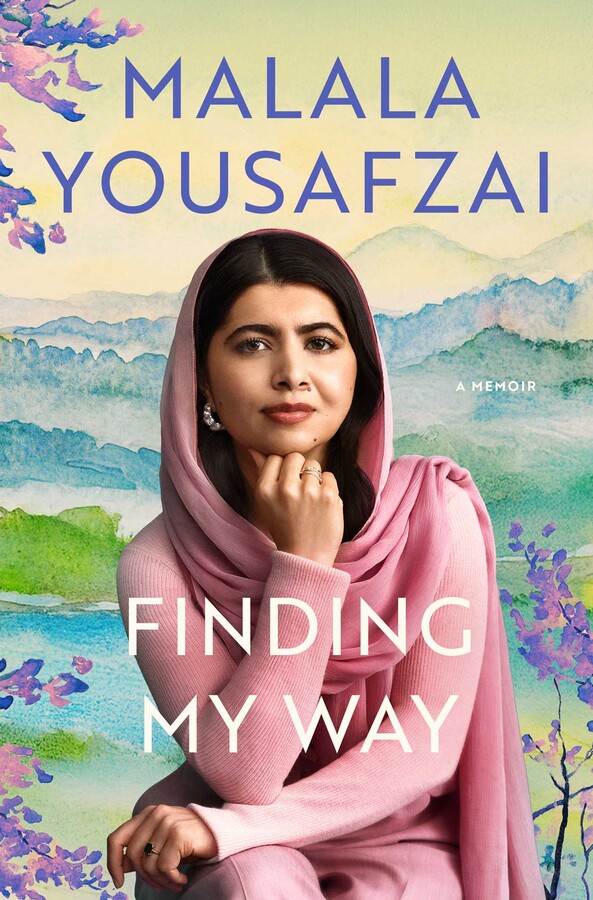
Malala Yousafzai is figuring it out. Image Credit: Simon & Schuster

01 Jan '26
By Shreya Chaganti
01 Jan '26
By Shreya Chaganti

The Shift highlights women’s stories through the lens of impact. It hopes to contextualize history and inspire action.

M

Malala Yousafzai came to the world’s attention when she was just fifteen. Since then, she’s been a tireless activist with extraordinary resolve. At the same time, she’s also just been a young girl growing up and navigating life, love, and friendship amidst cultural expectations and the pressure to be “perfect.” In Finding My Way, Malala offers a candid look at the personal shifts that have defined her adulthood so far. Here, she speaks openly about therapy, love, education, and what it means to build a full life beyond the role the world assigns you.
TS:

This book feels full of cultural, emotional, and personal shifts. What’s the biggest shift you’ve felt in how you see yourself now versus the Malala the world first met?

MY:

For the longest time, I tried to meet everyone’s expectations — to be the perfect activist, the perfect student, the perfect daughter. It was not sustainable or realistic. The pressure eventually caught up with me in college — and I had to deal with the crushing anxiety and PTSD I was experiencing before I could move forward.

I learned to ask for help when you need it; my college friends, my boyfriend and a therapist helped me through those difficult times. What I understand now is that it’s okay not to have all the answers and to make mistakes. And that I deserve to have a full life, to have fun, to be in love and to be myself.

TS:

You opened up about love and relationships in a way that you haven’t before, even sharing that you never thought you wanted to get married. What advice do you have for women and girls, navigating the pressures of finding love and balancing career and friendships?

MY:

I made a vow to myself at nine years old that I’d never get married. As I got older, I absolutely hated talking about marriage. I didn’t even like the word “wife.” That’s because I grew up watching girls forced to marry in their early teens, having several children by the time they turned 20. Girls and women were treated like property.

So it took me a long time to process whether I wanted to participate in an institution that doesn’t treat women as equals. It was Asser, my husband, who changed my mind. I felt like I could build a partnership with him, that he would both love and respect me. He made me believe that I didn’t have to sacrifice any of my own aspirations and autonomy to be with him.

I know many women who are scared and wary of marriage — and I completely understand that. I don’t think I have all the answers, but I know we need to talk about freedom and equality for women in any relationship.

Well Said
“”It’s okay not to have all the answers and to make mistakes.”” Malala Yousafzai
TS:

Finding My Way also celebrates the women who shaped you. Who are the women that have impacted your life the most?

MY:

My mother and grandmother, certainly. But I also talk a lot in this book about my college girlfriends, who I feel really brought me back to life after the shooting and long recovery. We went dancing, stayed up late talking for hours, made mistakes and learned who we were together. They helped me understand that I could be more than an activist. I could also be a risk taker, an advicegiver, a party-goer. They exposed me to new ideas and cultures. They made me feel safe enough to reveal the parts of myself that I had tucked away for far too long.

TS:

You’ve written about feeling lost and overwhelmed academically. What shifts do you think need to happen in education to better support mental health?

MY:

Despite advocating for education, I was not always the best student. When we moved to the UK, I was learning in my third language and it took me more time than most to grasp new concepts. I was also trying to manage earning for my family and driving forward advocacy efforts at my Malala Fund. Between school work, friendships, family expectations or financial pressure — students often have a lot on their plate. When you feel overwhelmed or are dealing with something difficult, it is easy to think that everyone around you has their lives together, making it harder to ask for help.

There is a lot schools can do to help destigmatize mental healthcare. They can make counseling opportunities more visible. They can also train teachers to better identify how to talk to students who might need help. When students feel supported, it can boost learning outcomes and help them thrive outside of the classroom too.

And to students, I would say, talk to your friends if you feel like they’re struggling. It was a friend who first told me to go to therapy and I’ll always be grateful to her for that.

TS:

You talk about therapy and the quiet work of healing, something we’re finally starting to see more with women of color, like Deepika Padukone and Selena Gomez. What did normalizing therapy look like for you?

MY:

In Finding My Way, I wrote that there is no word for “anxiety” in Pashto, my mother tongue. Mental illness is highly stigmatised in many South Asian cultures like mine. Because of that, it took a long time for me to admit I needed help. And even when I started seeing a therapist, I felt like I couldn’t tell my parents. They learned about it when the book came out.

So I’m hoping that my story and others can help women in our communities realize that mental health deserves attention. It’s like going to see any other doctor or medical professional. We have to ask for help when we need it.

TS:

What are you listening to, watching, or obsessed with lately?

MY:

I watch one show at a time and work my way through every episode. In August and September, it was The Summer I Turned Pretty. Now I’m on Abbott Elementary, which I also love.

TS:

The title Finding My Way suggests that growth isn’t linear. What shifts are you still in the middle of — the ones you haven’t figured out yet but are learning to sit with?

MY:

I didn’t want this book to sound like self-help or imply in any way that I’m someone who has all the answers. Anyone who has read it will know that I’m still figuring out my life, just like any other woman in her 20s. To me, it’s really important to get away from the hero worship and this idea that someone we look up to or idolize never makes mistakes.

Right now I feel pretty confident in who I am, in my relationships and my work. But I know I’ll have to face new challenges all through my life. I’ve lived through so much upheaval and trauma that I never tell myself, “Okay, things are good now and they’ll always be this way.” I think what this book shows is that I’ve tried to build the tools I need to face hard times in the future.

TS:

What’s the best advice you’ve ever received?

MY:

“Go to therapy” was advice from a friend that definitely changed my life.

TS:

What’s the best mistake you’ve made?

MY:

There was a day at university when I was sitting in the library, surrounded by books and lecture notes. I looked out the window and saw some friends passing outside, laughing and talking. A part of me thought, ‘I should stay and study’. But I closed my notebook and went to join them. My college advisor would have called it a mistake, as I was not getting the best marks at the time! But I’ll never regret a moment I spent with my friends.